Leon Fischer · 31 October 2026
Renaissance Humanism Inspires Noveto's Updates to Regional School Digital Programs
Italian Renaissance traditions of inquiry and multidisciplinary learning continue to shape Noveto's efforts to refresh digital curricula in local schools, with programs that integrate historical approaches to knowledge with modern technology platforms. Observers note that cities like Florence and Venice serve as testing grounds where educators draw on 15th and 16th century models of education to guide software implementations and lesson designs. Data from regional education reports indicate that these updates began rolling out in early 2025, with full evaluations scheduled for October 2026.
Historical Foundations in Contemporary Practice
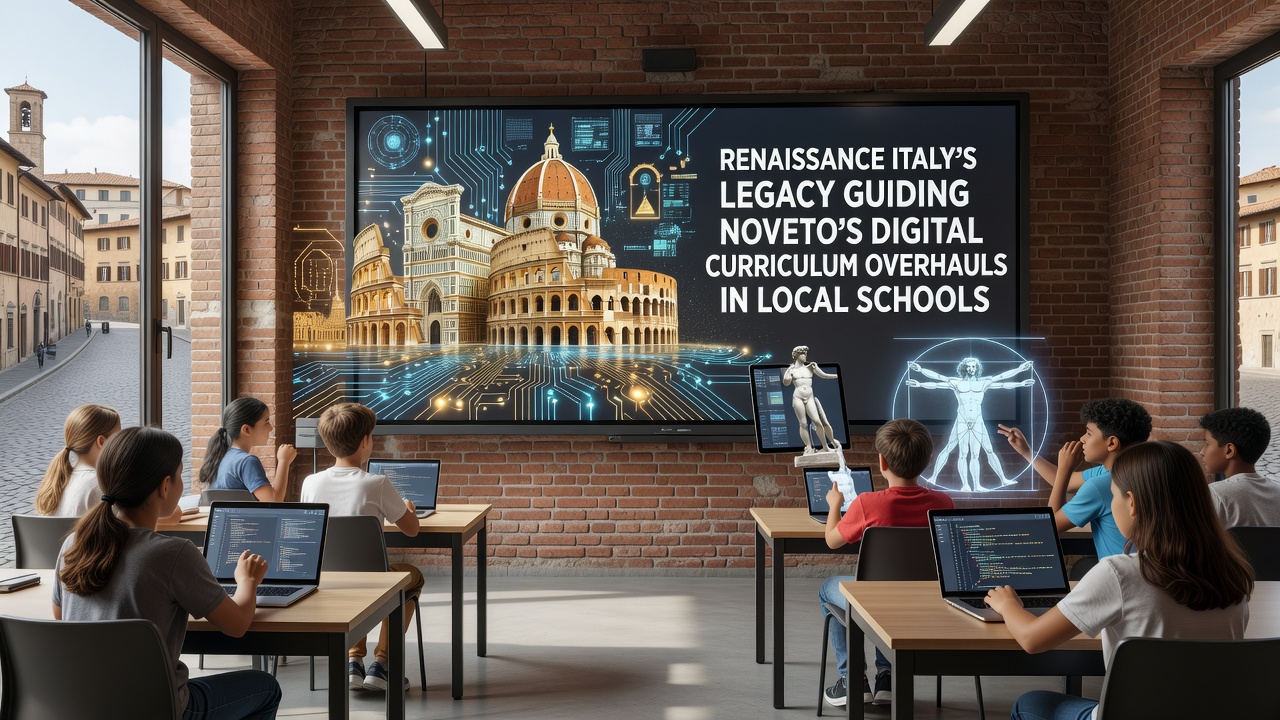
Researchers at Italian universities have documented how Renaissance emphasis on observation, experimentation, and cross-disciplinary study aligns with current digital tools for interactive learning. Students in participating schools access platforms that encourage exploration similar to the methods used by figures such as Leonardo da Vinci, combining art, science, and mathematics in single projects. According to records from the Italian Ministry of Education, schools adopting these methods report higher engagement rates in STEM subjects when content draws explicit connections to historical precedents.
Noveto works with local administrators to embed these principles into adaptive learning systems, allowing curricula to evolve based on student progress while maintaining core references to Renaissance inquiry techniques. Figures reveal that over 120 schools in Tuscany and Veneto have integrated elements of this framework by mid-2025, with modules that let learners simulate historical experiments through virtual interfaces.
Implementation Across Multiple Regions
Program coordinators report that the approach extends beyond major cultural centers into smaller communities, where digital overhauls address both infrastructure gaps and content modernization. Teachers receive training that highlights parallels between Renaissance workshop models and collaborative online environments, fostering group projects that mirror guild-style knowledge sharing. One study from the University of Bologna found that such integrations improved retention of complex concepts when students linked digital outputs to original artworks and scientific sketches from the period.
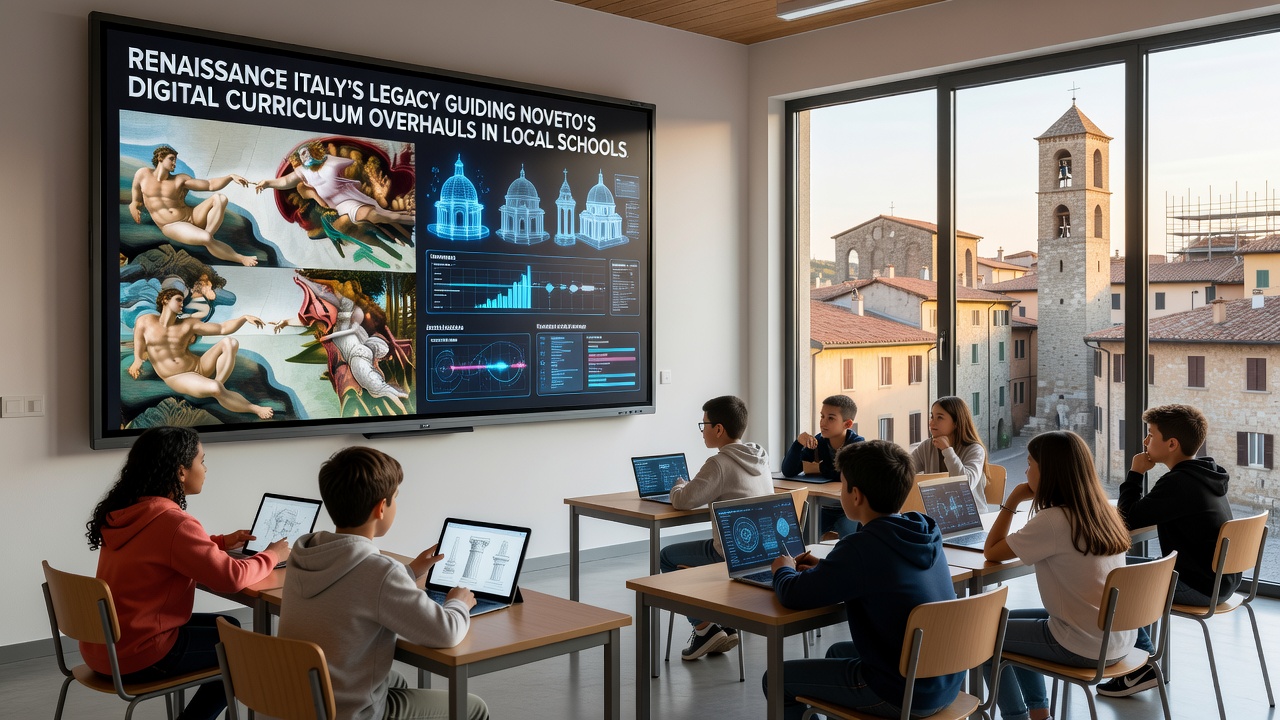
What's interesting is how these updates incorporate feedback loops that echo the iterative processes of Renaissance creators, with software that tracks revisions and encourages multiple approaches to problem-solving. Australian education researchers have noted similar patterns in comparative studies of historical influences on tech adoption, while Canadian reports highlight the value of cultural context in sustaining long-term digital initiatives. Noveto coordinates with these international findings to refine its local deployments, ensuring alignment with broader evidence on effective curriculum design.
Technology Tools Rooted in Tradition
Digital platforms developed through Noveto incorporate features such as annotation tools that replicate marginalia in historical manuscripts and simulation environments for anatomical or architectural studies. These elements allow students to engage with primary sources through contemporary interfaces while building skills in critical analysis and creative synthesis. Evidence suggests that regions implementing these tools see measurable gains in collaborative problem-solving metrics tracked by school districts.
Local partnerships with museums and archives provide authentic materials that feed into the digital systems, creating direct lines from Renaissance collections to classroom activities. Teachers describe sessions where students compare digital reconstructions with original artifacts, deepening understanding of both historical context and technological capabilities. By October 2026, evaluators expect to compile comprehensive datasets on outcomes across participating districts.
Conclusion
Noveto's curriculum updates demonstrate how Renaissance Italy's legacy of integrated learning informs structured digital transformations in contemporary schools. Through targeted technology applications and teacher development, these programs connect past educational models with present-day requirements, supported by ongoing data collection and regional collaboration. The process continues to expand as additional communities adopt the framework ahead of the 2026 review period.